
By JC | WeRockTV | Good News
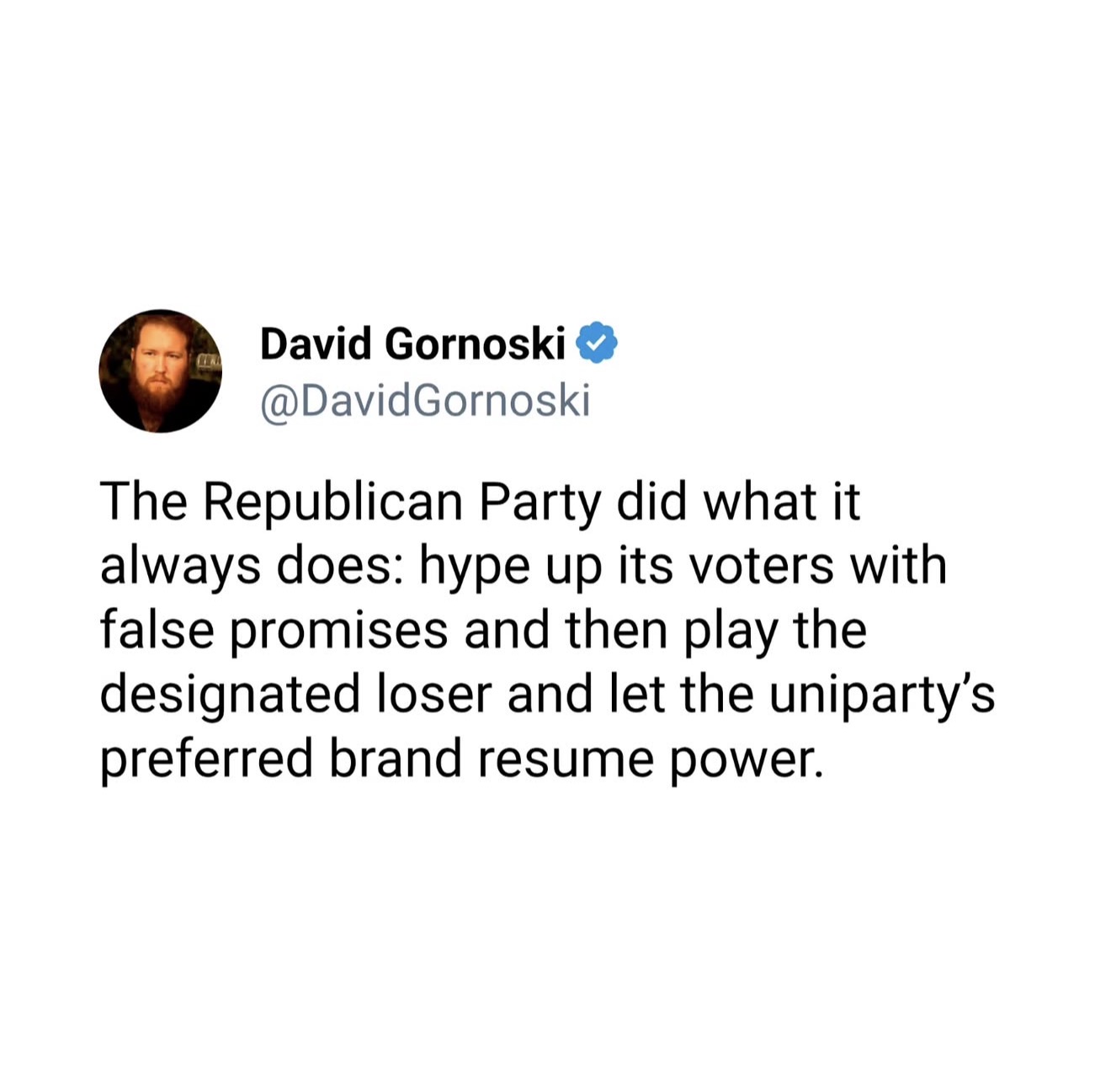
David Gornoski, co-founder of We Rock Network, recently offered a sharp criticism of the Republican Party—and, by extension, America’s two-party political establishment.
His argument is straightforward: Republican voters are repeatedly promised fundamental change, only to watch their elected representatives return to the familiar business of Washington. Gornoski calls this the uniparty—the idea that, beneath the partisan theater, the two major political parties often preserve the same political arrangements.
It’s a provocative accusation. But it raises a question worth examining: What happens when the people who campaign against the establishment become the establishment?
The Permanent Government
Every election season brings a familiar collection of promises: smaller government, fiscal responsibility, government accountability, an end to unnecessary foreign wars, and protection of individual liberty. Candidates make speeches about returning power to the people. Then the election ends.
Budgets expand. Federal debt grows. Military commitments continue. Government agencies retain enormous influence over everyday American life. The names change. The machinery remains.
Critics of the two-party system see this as evidence of an establishment that survives regardless of which party controls Congress or the White House. Others argue that governing requires compromise, that the parties have substantial policy differences, and that political disappointment does not establish deliberate coordination.
Both considerations matter. But neither excuses elected officials from explaining the gap between their promises and their performance.
The Problem With Party Loyalty
Political parties can serve a useful purpose. They organize competing ideas, recruit candidates, and give voters a way to understand broad policy differences. But party loyalty becomes dangerous when it replaces independent judgment.
A Republican who supports excessive government spending should face the same scrutiny as a Democrat who does. A Democrat who supports an unnecessary war should be held to the same standard as a Republican who does.
And politicians who campaign on liberty should be expected to defend liberty even when doing so inconveniences their own leadership. Principles should determine political loyalty. Political loyalty should never determine principles.
The Illusion of Opposition
One of the most powerful tools in politics is the promise that everything will change once the other party is defeated. Sometimes elections do produce meaningful changes. Judicial appointments, taxation, regulation, immigration policy, and social legislation can differ dramatically between administrations.
But the persistence of certain policies across both parties deserves scrutiny. Why does the national debt continue growing? Why do military interventions remain so difficult to end? Why does Washington accumulate authority while ordinary Americans struggle to influence the decisions affecting their lives?
These are not exclusively Republican or Democratic questions. They are American questions. And citizens deserve serious answers.
Accountability Begins With the Voter
Gornoski’s criticism challenges Americans to reconsider what political victory actually means. Is winning an election enough? Or should victory be measured by what elected officials accomplish afterward?
A campaign promise is not an achievement. A political slogan is not a governing philosophy. And defeating the opposing party is not necessarily the same thing as advancing liberty.
We should evaluate elected officials by their actions, not their party affiliation, television appearances, fundraising totals, or carefully rehearsed speeches. That standard must apply equally to politicians we admire and politicians we oppose.
Beyond Red and Blue
At WeRockTV, we believe truth is more important than tribal allegiance. That means questioning political power regardless of who holds it, recognizing legitimate disagreements between Republicans and Democrats, and refusing to excuse hypocrisy from either side.
It means defending freedom of conscience, individual responsibility, constitutional limitations, and the dignity of every human being. Most importantly, it means remembering that elected officials work for the people—not the other way around.
David Gornoski’s criticism is an invitation to look beyond the spectacle of partisan competition and examine the actual results of government.
Americans don’t need another election season filled with theatrical outrage and promises nobody intends to keep. They need honesty. They need accountability. And they need representatives who remember whom they were elected to serve.
The question isn’t simply which party wins. It’s whether the American people do.
“Prove all things; hold fast that which is good.” — 1 Thessalonians 5:21 (KJV)
— JC




Leave a Reply