Some places become meaningful because we travel to them. Others become part of us before we know enough to appreciate them.
Mountain Brook is that kind of place for me.
I grew up here, and I live here today. This video gives me another reason to appreciate the landscape around me: its beauty reflects both an ambitious plan and circumstances its planners could never fully control.
The video offers a striking interpretation of our history. A financial catastrophe interrupted a development dream, and that interruption helped preserve some of the landscape that makes Mountain Brook special.
That idea deserves a closer look.
During the late 1920s, developer Robert Jemison Jr. and landscape architect Warren H. Manning worked with a talented team to create a residential community beyond Birmingham. Their vision brought homes, recreation, and commercial life into a wooded setting. The Birmingham Historical Society describes a development encompassing approximately 4,500 acres. (birminghamhistoricalsociety.com)
What interests me is the attention they gave the land.
A community takes on a different character when its designers respect hills, trees, water, and the experience of moving through them. Streets become more than routes between addresses. They help determine what people notice, how neighborhoods feel, and whether nature remains part of ordinary life.
That was an ambitious investment in a future community.
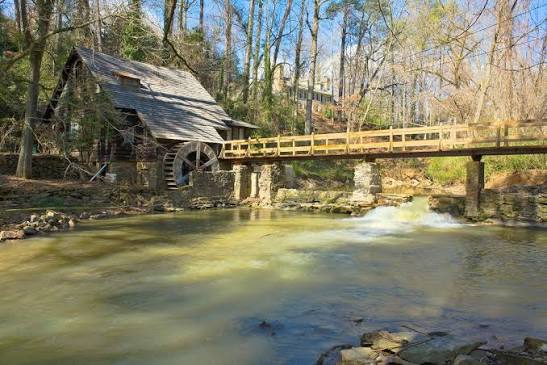
The original development included architectural touches that still help tell its story: the Mount Vernon replica, stone features, riding trails, and the English village atmosphere. The Old Mill was designed as a promotional landmark rather than a working mill. (birminghamhistoricalsociety.com)
Even that detail makes me smile.
A building created to suggest history eventually acquired a history of its own. Generations later, it belongs to the community’s memory. Time has given an early development landmark a meaning its builders could only have imagined.
Then came the crash of 1929 and the Depression.
The video frames this as the moment Mountain Brook was effectively frozen. Historical accounts support a more specific point: some proposed home sites remained unbuilt after the market collapsed, while deed restrictions helped protect land around Jemison Park. (lalh.org)
The distinction matters because preservation rarely has a single cause.
Planning, financial circumstances, legal protections, and later stewardship all help explain why a landscape survives. The crash disrupted the dream; decisions made before and afterward helped determine what endured.
There was real suffering in the Depression. Recognizing an unexpected consequence of that disaster does not diminish what families lost.
It does remind me how difficult it is to predict the full meaning of an interruption.
Sometimes an unfinished plan leaves room for something valuable to survive.
Growing up here, I did not need to understand landscape architecture to enjoy the results.
You experience your hometown first through familiarity: schools, streets, friendships, recognizable corners, and the people who make those places matter. Only later do you begin to understand how much thought and effort helped create the setting around your childhood.
It was a great place to grow up.
I am grateful for the opportunities, the beauty, and the sense of belonging. Those are gifts, and getting older has made me more aware of them.
The school years are part of that gratitude. So are the teachers and coaches whose influence continues long after a class or season ends. A community’s lasting architecture includes the standards people set and the encouragement they give.
That kind of building happens person by person.
I have been thinking about that recently while writing about Coach Greg Echols. A hometown becomes richer when we remember the people who invested their time and energy in its children.
Buildings give us landmarks. People give us reasons to care about them.
Living here now brings another perspective.
I can appreciate Mountain Brook as an adult while still carrying the memories of growing up here. Familiar surroundings connect different chapters of my life. A place can remind you of who you were while giving you somewhere to keep becoming.
That continuity means something to me.
I love that trees and water remain part of the community’s identity. Jemison Park, which the city describes as a fifty-four-acre linear greenway, offers space for walking, reading, birdwatching, and simply enjoying the outdoors. (mtnbrook.org)
There is value in having somewhere to slow down.
A community needs places where people can spend time without buying anything, achieving anything, or putting on a performance. A shaded path and flowing creek can offer a welcome change of pace.
Keeping those places healthy requires attention.
Mountain Brook’s reputation for wealth attracts headlines, but wealth alone cannot explain why a place feels like home. The deeper questions concern how people use their resources, care for their surroundings, and treat one another.
My gratitude for growing up here comes with a hope that others will experience that same welcome and opportunity.
Love for a hometown can inspire generosity.
It can mean supporting a local business, encouraging a student, thanking a teacher, protecting a creek, or taking time to hear someone’s story. Each act contributes something to the community we share.
The landscape we admire today is an inheritance. Our daily choices help decide what the next generation receives.
As a Christian, I think about stewardship when I consider that responsibility. Gratitude becomes more meaningful when it leads to care.
“This is the day the Lord has made; we will rejoice and be glad in it.” —Psalm 118:24
There is much here to be glad about.
The video tells a story about a grand vision interrupted. I see another story continuing alongside it: generations of people making lives within that landscape, finding friendships, learning lessons, and leaving something for those who follow.
I am thankful my life is part of that story.
Mountain Brook gave me a truly wonderful place to grow up. Today, it gives me a place to live, remember, reconnect, and contribute.
The plans changed. The years passed. The trees kept growing.
And this place is still home.
JC