
In Jefferson County Jail, I learned something about the difference between rights and privileges.
On the outside, we tend to confuse the two. Inside, the distinction becomes considerably clearer.
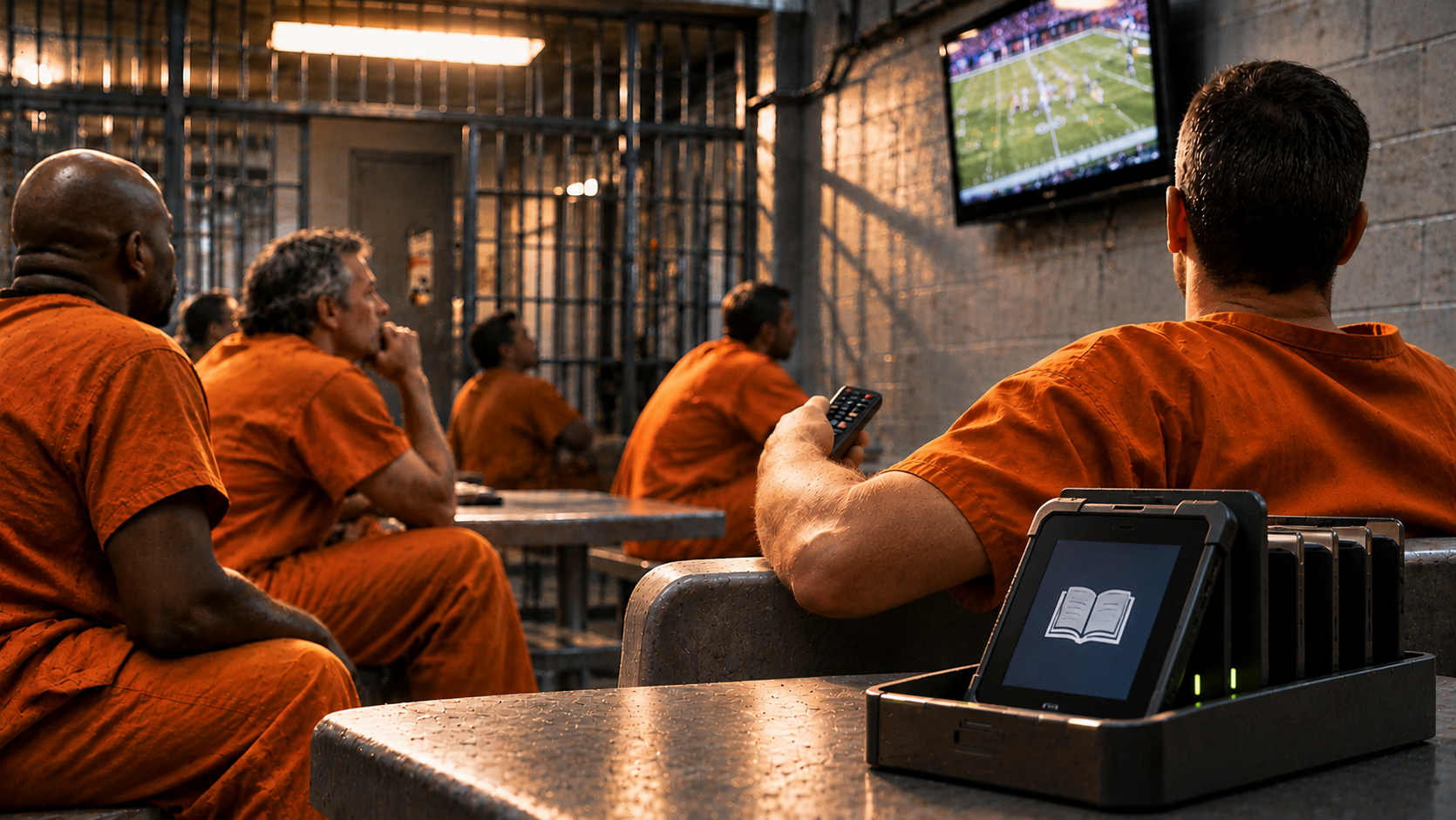
We had a right to eat three times a day. We did not have a right to control the television. In fact, we didn’t even have the privilege of holding the remote.
There were men in our housing area who had been there longer than the rest of us. Some had accumulated enough time and good behavior to earn special privileges. These weren’t privileges the inmates invented for themselves. They were officially granted by the jail staff.
They were called floor managers.
When the rest of us had to roll back into our cells, the floor managers could stay out. They could walk around. They could clean up. They could watch television. And perhaps most importantly, they usually controlled the remote.
Now, that might sound ridiculous to somebody who has never been incarcerated. But imagine living in a place where you cannot decide when to leave your room, when to walk around, or what to watch on television.
Suddenly, the remote control becomes a symbol of authority. A little plastic object with buttons on it. Something most Americans lose between the couch cushions.
In jail, it represented freedom. Not much freedom, mind you. But more than the rest of us had.
There were electronic tablets, too. They weren’t iPads, but they let inmates read books and the Bible. The floor managers controlled who got access to those tablets as well.
A paper Bible or a paperback book wasn’t simply something I could assume I’d have. Things I had always considered ordinary parts of life were treated as privileges.
And privileges depended on the rules, your circumstances, or decisions made by somebody else.
I began to understand that there was a difference between having something because you were entitled to it and having something because somebody allowed you to.
The distinction wasn’t academic. It governed everyday life.
The floor managers occupied an interesting position. They were still inmates. Still incarcerated. Still subject to the same walls and locked doors. But within that confined world, they had a little more freedom than the rest of us.
There was a hierarchy. And like most hierarchies, you could learn a great deal about it by watching who had control.
Sometimes that meant watching who controlled the television. Sometimes it meant watching who handed out the tablets.
I’ve thought about that since getting out. We live in a country where we talk constantly about our rights. Freedom of speech. Freedom of religion. Freedom of association.
But how often do we stop to distinguish those rights from the conveniences and privileges we’ve grown accustomed to?
I certainly didn’t think much about the distinction before jail. Then I found myself in a place where a paperback book could seem like a luxury, an electronic tablet could mean access to Scripture, and a television remote could become a badge of status.
It was a strange education. And I didn’t have to pay tuition.
JC