
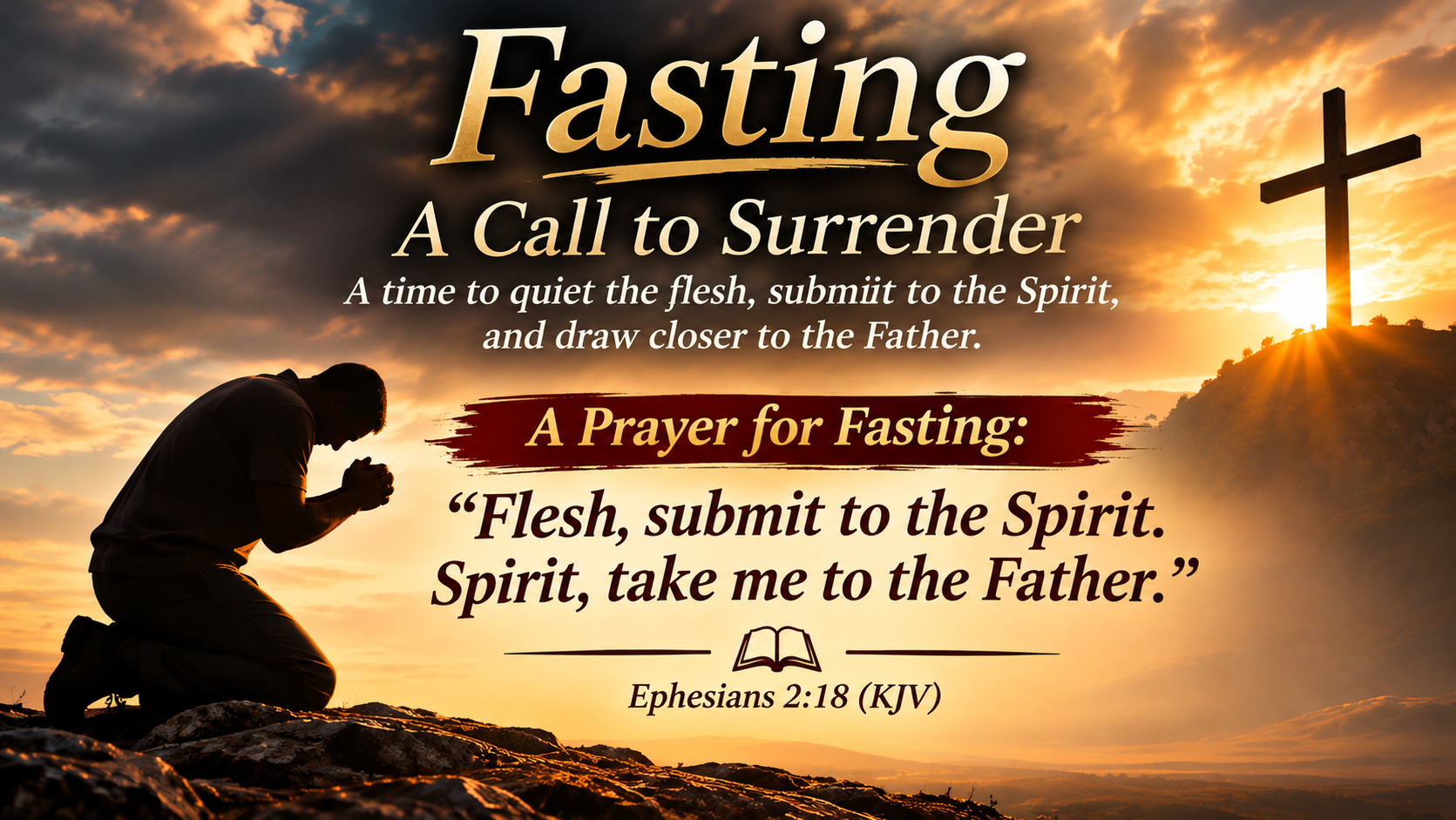
Fasting is not about starving the body. It is about feeding the soul.
There is a quiet war taking place within every human being. It is the struggle between the flesh and the spirit, between what we want and what we know is right, between the appetites of this world and the calling of something eternal.
The flesh demands immediate satisfaction. It wants comfort, pleasure, recognition, and control. The spirit whispers patience where the flesh demands urgency, forgiveness where the flesh demands revenge, and surrender where the flesh insists on control.
Sometimes the only way to hear that whisper is to become quiet enough to listen. That is where fasting begins.
The Purpose of Fasting
Fasting is not a hunger strike against heaven. It is not a negotiation with God or an attempt to earn His favor through suffering. It is an act of surrender.
When Jesus fasted forty days in the wilderness, He was tempted to turn stones into bread. His response revealed something fundamental about physical hunger and spiritual nourishment.
Man shall not live by bread alone, but by every word that proceedeth out of the mouth of God. — Matthew 4:4 (KJV)
Bread sustains the body. Truth sustains the soul. Both matter, but only one is eternal. Food is not the enemy. The problem begins when blessings become masters.
The Flesh Is a Terrible Master
The Apostle Paul understood the struggle: “But I keep under my body, and bring it into subjection…” — 1 Corinthians 9:27 (KJV).
The objective is not to punish the body, but to restore the proper order of authority. The body is a gift from God, not an enemy to be destroyed. Yet its desires were never intended to govern the soul.
Fasting creates a deliberate space between desire and obedience. Hunger arrives, but hunger does not have to make the decision. In that act of restraint, freedom becomes possible.
The Fast God Chooses
Isaiah warns against turning fasting into religious performance. God is not impressed by deprivation while injustice, cruelty, and selfishness remain untouched.
Is not this the fast that I have chosen? to loose the bands of wickedness, to undo the heavy burdens, and to let the oppressed go free… — Isaiah 58:6 (KJV)
The fast God desires reaches beyond the dinner table and into the heart. It makes room for mercy, humility, generosity, reconciliation, and love. If food is surrendered but resentment and pride are continually fed, what has truly changed?
Less of Me. More of Him.
He must increase, but I must decrease. — John 3:30 (KJV)
That is the heart of fasting: not self-destruction but self-denial, not rejection of life but restoration of priorities, not an attempt to make God listen but a willingness to listen to God.
A Prayer for Fasting
A simple, powerful prayer for the journey is:
Flesh, submit to the Spirit. Spirit, take me to the Father.
These words express surrender, not punishment. The flesh yields its demands. The spirit seeks communion with the Father. And through Jesus Christ, the way to the Father is made known.
For through him we both have access by one Spirit unto the Father. — Ephesians 2:18 (KJV)
The true measure of a fast is not how many meals were missed or how many hours passed. It is what happens afterward: greater patience, more compassion, less pride, and a deeper willingness to forgive.
The purpose of fasting is not simply to endure hunger. It is to emerge better prepared to love.
Watch and pray, that ye enter not into temptation: the spirit indeed is willing, but the flesh is weak. — Matthew 26:41 (KJV)
— JC






Leave a Reply