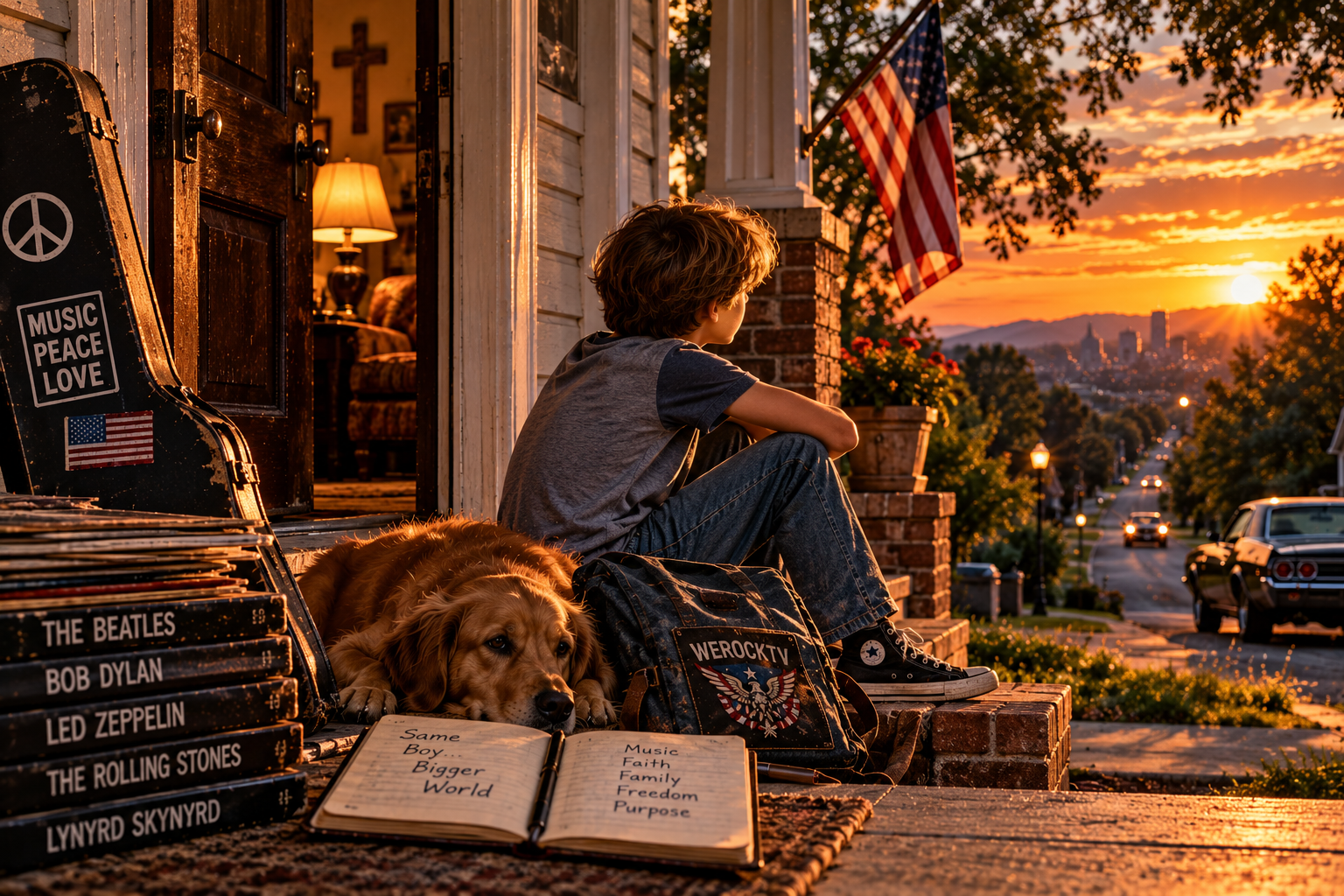
The Other Side of the Door
The first time I understood that a door could be both an invitation and a warning, I was old enough to reach the knob and young enough to believe every room held a secret.
At home, doors had meanings. The front door welcomed company, provided somebody had straightened the cushions. The kitchen door admitted muddy shoes only under circumstances of considerable urgency. A closed bedroom door meant privacy, unless a parent decided privacy was a privilege currently under review.
I respected these distinctions approximately.
Beyond our house lay a neighborhood full of other lives. I watched fathers leave for work, mothers call children inside, teenagers disappear into cars with radios playing loud enough to announce their ambitions. I wondered whether every family had the same rules, or whether ours had received a particularly thorough edition.
There was comfort in belonging. I knew the familiar voices, the route to church, the sound of supper being prepared. I knew which jokes might earn a smile and which subjects could make a conversation turn cold. A child learns the weather inside a house before he understands the weather outside it.
But comfort could feel like confinement when the world beyond the porch seemed so enormous.
I wanted to see it. Not necessarily to escape anything. I simply wanted proof that life contained more than the roads I already knew. I imagined distant cities, concert halls, strange landscapes, and people who might hear a song differently from the way I did.
The radio was my first passport.
At night I would turn the dial and listen to stations fading in and out. Sometimes a voice appeared through the static, speaking from somewhere I had never been. Sometimes a guitar burst into the room with such confidence that I sat perfectly still. Someone out there had found a way to turn private feelings into public sound.
I wanted to learn that trick.
The trouble was that I also wanted everyone at home to approve of the person I might become. I could imagine leaving, but not disappointing them. I could picture a stage, but I could also picture the faces in the audience, measuring whether I had made something worthwhile of myself.
I did not yet know that applause and approval are different things.
At church I heard about the narrow gate. The phrase stayed with me, though I pictured an actual gate, perhaps with hinges that squeaked. I wondered whether choosing the right road meant refusing all the others, and how anybody could know without walking a little way down them.
My questions were sincere. My timing was occasionally disastrous.
I had begun to notice how grown people spoke about freedom. They praised it, then worried when a child wanted to exercise a little of it before supper. I understand the contradiction better now. Love fears the unknown, especially when the unknown has your child’s face. Still, a boy needs room to wander in his imagination before he ever ventures far in his shoes. Mine wandered across state lines and through songs, always returning to the same front steps.
One evening I stood at the front door after sunset, listening to the neighborhood settle. Porch lights blinked on. A dog barked twice, then apparently reconsidered its position. Inside, dishes clinked in the kitchen. Outside, the street curved beyond my sight.
I remember wanting both worlds.
Years later, I would confuse freedom with the absence of limits. I would discover that some boundaries protect the people we love, and that breaking through a door is not the same as finding a way forward. Those lessons would arrive with consequences no childhood sermon could have prepared me to understand.
But the boy at the doorway knew none of that. He was not planning a rebellion. He was listening for a future he could barely describe.
Someone called me inside.
I turned, hesitated, and took one last look at the road.
Then I went home, carrying the sound of distant music with me.