Conflict Isn’t the Enemy: What I Learned About Resolving Disagreements
Today at Longleaf, I learned something that challenged the way I think about disagreements: conflict isn’t necessarily good or bad. It’s a natural part of life. What matters is how we respond.
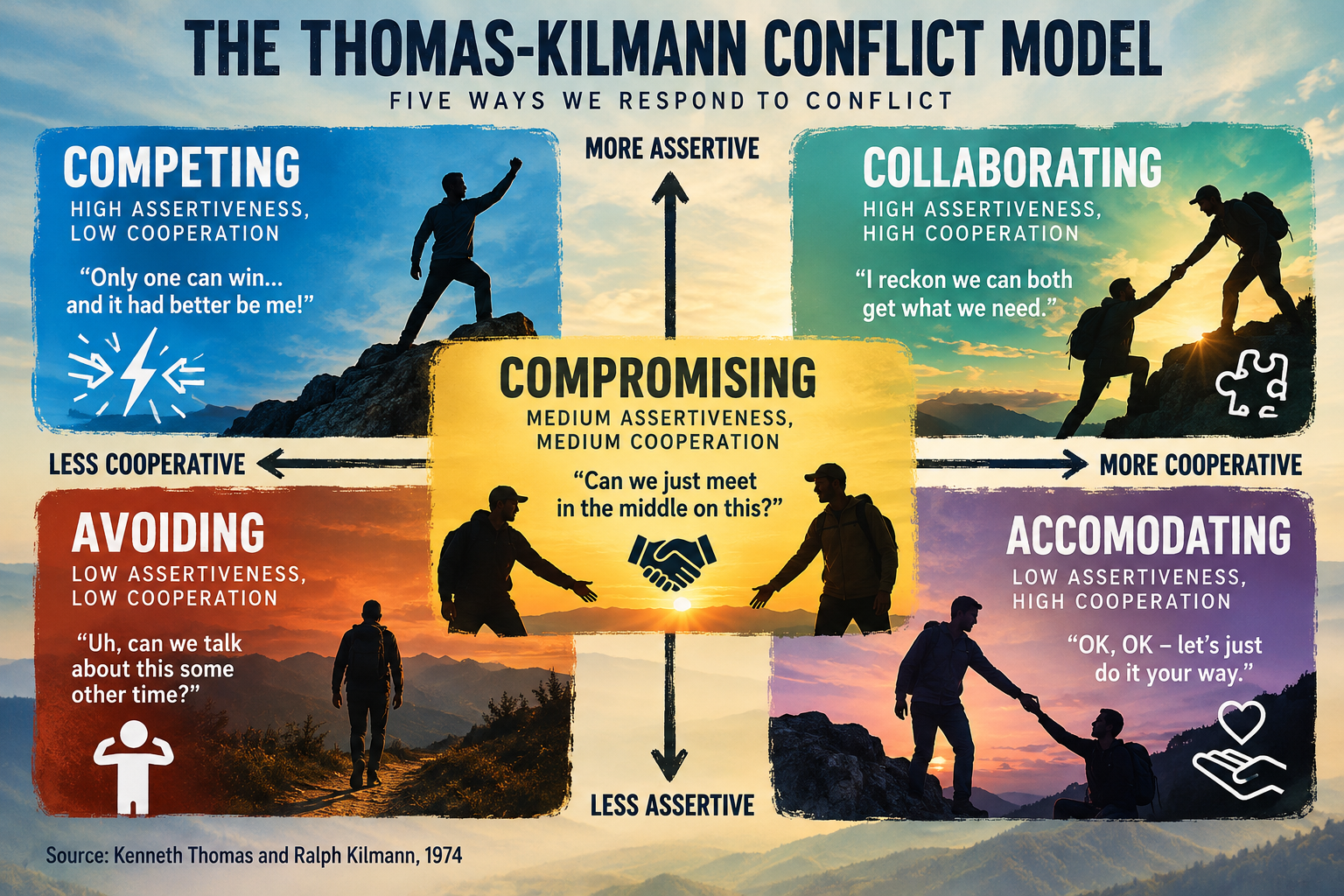
We explored the Thomas-Kilmann Conflict Model, developed by Kenneth Thomas and Ralph Kilmann. It identifies five approaches to conflict: competing, collaborating, compromising, avoiding, and accommodating.
Each approach balances two qualities: assertiveness and cooperation. Assertiveness means standing up for your needs. Cooperation means considering the needs of others. Healthy conflict resolution requires knowing when and how to use both.
When avoiding conflict isn’t peace
One lesson particularly caught my attention: avoiding conflict doesn’t always create peace. Sometimes we avoid difficult conversations because we fear rejection, confrontation, or losing someone we love. Sometimes past experiences make disagreement feel threatening.
But unresolved conflict can create resentment, anxiety, emotional distance, and damaged relationships. Feeling misunderstood, controlled, or judged can also trigger powerful protective reactions. That’s why understanding ourselves matters.
Five ways to respond
Competing prioritizes your position. Accommodating prioritizes the other person’s needs. Avoiding postpones engagement. Compromising seeks a middle ground. Collaborating works toward meeting both parties’ needs.
None is appropriate in every situation. Sometimes stepping away is necessary for safety. Sometimes boundaries must come first. But when both people are willing to participate respectfully, collaboration can open doors that confrontation cannot.
Looking at our own blind spots
Perhaps my biggest takeaway was the importance of examining our own blind spots. It’s easy to focus on what someone else has done wrong. It’s harder to ask whether our pride, assumptions, or need to be right might be contributing to the problem. That requires humility.
Peace isn’t always the absence of conflict. Sometimes peace begins with the courage to address conflict constructively. And reconciliation, when possible, requires more than one person’s willingness.
That’s a lesson worth carrying forward.
Good News. Good Music. Good Works.