Following the Policy — and the Money
When you look at a political figure’s public positions, you see one layer. When you look at their legislation, you see another. But when you look at their funding and network, you begin to understand how influence actually moves.
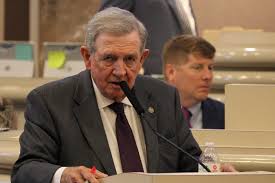
In the case of Jim Carns, his connection to Israel doesn’t exist in isolation—it sits inside a broader ecosystem of state politics, economic interests, and campaign infrastructure.
The Legislative Signal
Carns’ sponsorship of pro-Israel resolutions—most notably House Joint Resolution 56 (2012)—places him clearly on record supporting:
- Israel’s right to self-defense
- Strong U.S.–Israel alignment
- Continued cooperation
That’s the policy layer.
The Financial Layer
Now look at the campaign structure behind him.
Total Political Activity
- $401,222 in contributions
- $324,534 in expenditures
This is not a fringe operation. It’s a well-funded, institutionally supported campaign structure.
Who Funded the Campaign
Top contributors include:
- Forestry PAC
- Alabama Medical PAC
- Pride PAC II
- ProgressPAC
- Alabama House Majority PAC
- Auto PAC
- EduPAC
- Alabama Farmers Federation PAC
- Southern Strategy Group PAC
- Trial Lawyers PAC
What this tells us:
These are not ideological foreign-policy PACs. They are:
- Industry groups
- State power blocs
- Economic stakeholders
👉 Meaning:
Carns’ support base is domestic, institutional, and economically driven
There is no visible direct Israel-focused funding pipeline in these contributions.
Where the Israel Connection Actually Lives
So if it’s not coming from donors—where does it come from?
1. Legislative Positioning
Carns used his office to:
- Sponsor pro-Israel resolutions
- Align Alabama symbolically with Israel
2. Trade & Economic Networks
Through involvement in:
- Economic development boards
- Trade-oriented organizations
He operated in a space where:
- International relationships (including Israel) are built through commerce
The Campaign Machine
Where the money does go is equally important.
Top expenditures include:
- Red State Strategies LLC
- The Prosper Group Corporation
- Lamar Companies
- Vestavia Hills Chamber of Commerce
- Kelly Scott Madison Inc
These are:
- Political consulting firms
- Media and messaging operations
- Local business institutions
👉 This tells us:
The campaign is built to win elections and maintain influence locally, not to fund foreign policy agendas directly.
The Real Structure (When You Put It Together)
Carns’ connection to Israel is not about:
- Direct funding from pro-Israel groups
- Foreign influence through campaign finance
Instead, it looks like this:
Layer 1 — Political
- Republican alignment
- Sponsored pro-Israel legislation
Layer 2 — Economic
- Trade and development networks
- Exposure to international partnerships
Layer 3 — Institutional Support
- Funded by Alabama-based industry PACs
- Supported by state political infrastructure
Why This Matters
There’s a tendency to oversimplify connections:
- Either everything is ideological
- Or everything is financial
In reality, it’s usually neither.
In Carns’ case, support for Israel appears to be policy-driven and structurally reinforced, not donor-driven.
Final Thought
Jim Carns’ story shows how influence actually works:
- Policy positions are expressed through legislation
- Relationships are built through trade and governance
- Campaigns are funded by local power structures
And somewhere in the middle of all that,
a state legislator in Alabama becomes part of a global conversation.
Not because of a single donor.
Not because of a single vote.
But because of the system he operates within—and the choices he made inside it.