The First Note
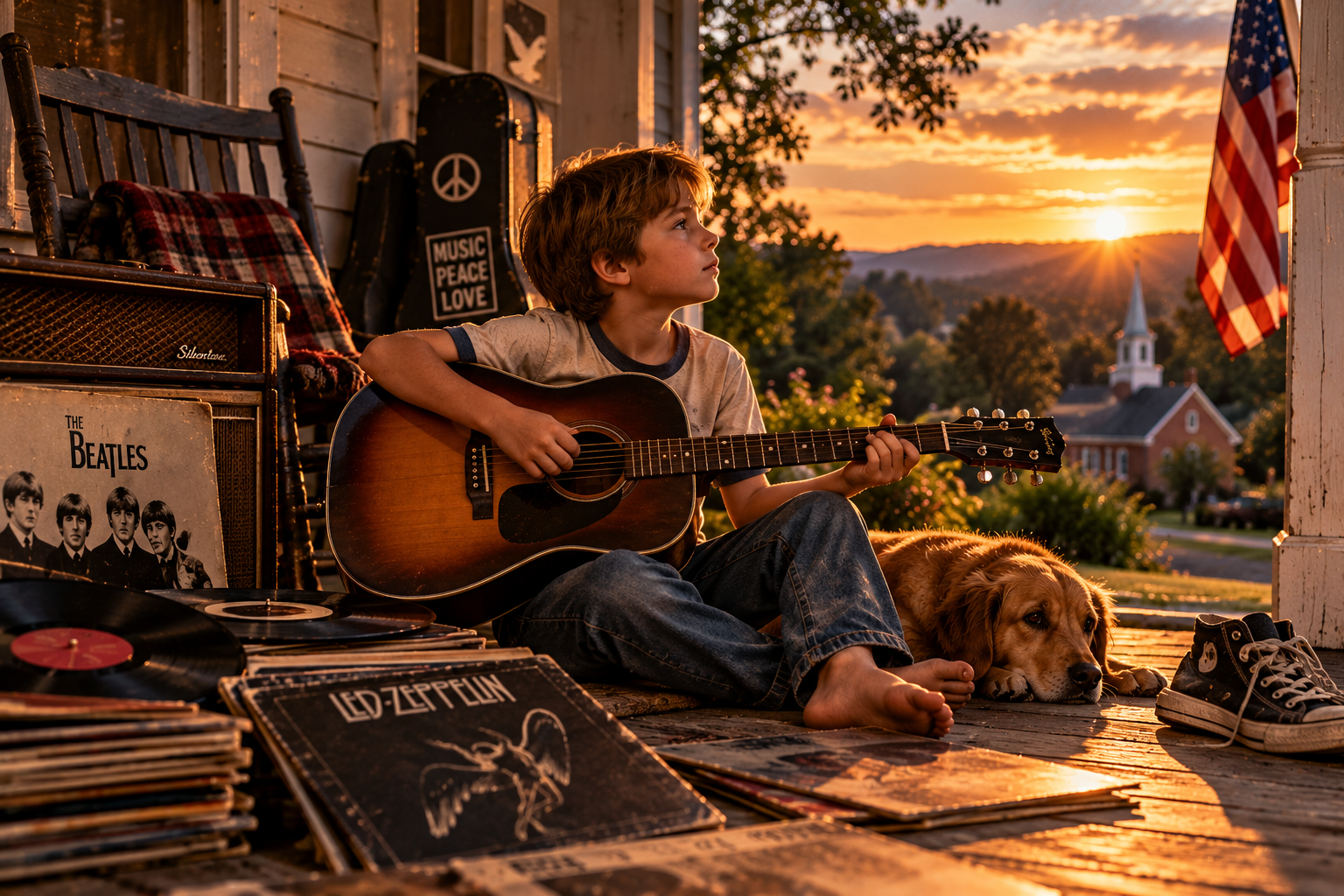
The first guitar I remember wanting belonged to somebody else. That was true of most things worth wanting when I was young: they appeared in another person’s hands, making sounds I couldn’t yet explain.
In Alabama, music was everywhere, though nobody thought to call it an education. It drifted from car radios, church sanctuaries, grocery stores, and open windows on summer evenings. Gospel promised heaven. Country music described the trouble getting there. Rock and roll suggested taking a different road altogether.
I listened to all three.
At home, words carried weight. A man’s name meant something. His handshake meant something. His conduct reflected on people who had never been present when he made his decisions. I absorbed these lessons before I understood that reputation and character, though related, were not identical twins.
One could survive a bad afternoon. The other required daily maintenance.
My father believed in getting things done. My mother understood that sometimes people needed to be heard before they could do anything at all. I watched them through a child’s eyes, collecting impressions rather than conclusions. Children don’t know their parents are complicated. They discover it slowly, and usually at inconvenient moments.
I wanted their approval. I also wanted room to become somebody neither of them had imagined.
That is a difficult wish to explain at the dinner table.
School offered its own peculiar arrangements. There were rules for walking in lines, rules for raising hands, rules for when a boy might speak. I obeyed enough of them to avoid becoming a permanent administrative concern. The rest I considered suggestions.
But music was different. Music demanded discipline without making discipline feel like punishment. You could practice a phrase a hundred times and still discover something new on the hundred and first. Nobody could hand you the ability to play. You had to earn it, note by note.
I liked that bargain.
I also liked the possibility that a shy thought might become a loud sound. A guitar could say, I’m here, without asking permission from the room. For a boy trying to understand his place in a family and a world full of expectations, that was no small revelation.
Church taught me another kind of listening. I heard about grace, mercy, and a love that could not be purchased by good behavior. Those ideas appealed to me, although I would spend much of my life trying to earn what I had been told was freely given.
The contradiction didn’t trouble me then. Childhood is generous that way.
On Sundays, I watched adults sing with their eyes closed. Some seemed transported. Others appeared to be remembering the grocery list. I wondered whether God minded the difference. Later, I would wonder whether He minded the questions.
At night I imagined stages I had never seen and audiences who had never heard of me. In those dreams, I knew every chord. The band never missed a cue. Nobody argued over volume, money, or who had forgotten to load the equipment.
I hadn’t met enough musicians yet.
Still, the dream mattered. Not because fame was waiting around the corner, but because I had discovered something that made time disappear. Hours could pass while I listened to a record or chased a melody through my head. The world remained difficult to understand, but for three minutes a song could give it shape.
I didn’t know what kind of man I would become. I couldn’t imagine the mistakes, the losses, or the long journey back toward faith. I knew only that somewhere inside the noise was a sound I wanted to make myself.
And once I heard it, silence would never mean quite the same thing again.
Years later, I would remember those beginnings less as events than as a feeling: the porch after rain, a radio playing somewhere nearby, the certainty that life contained more than I could see. I didn’t need a map yet. I needed curiosity, some patience, and someone willing to let me make noise.