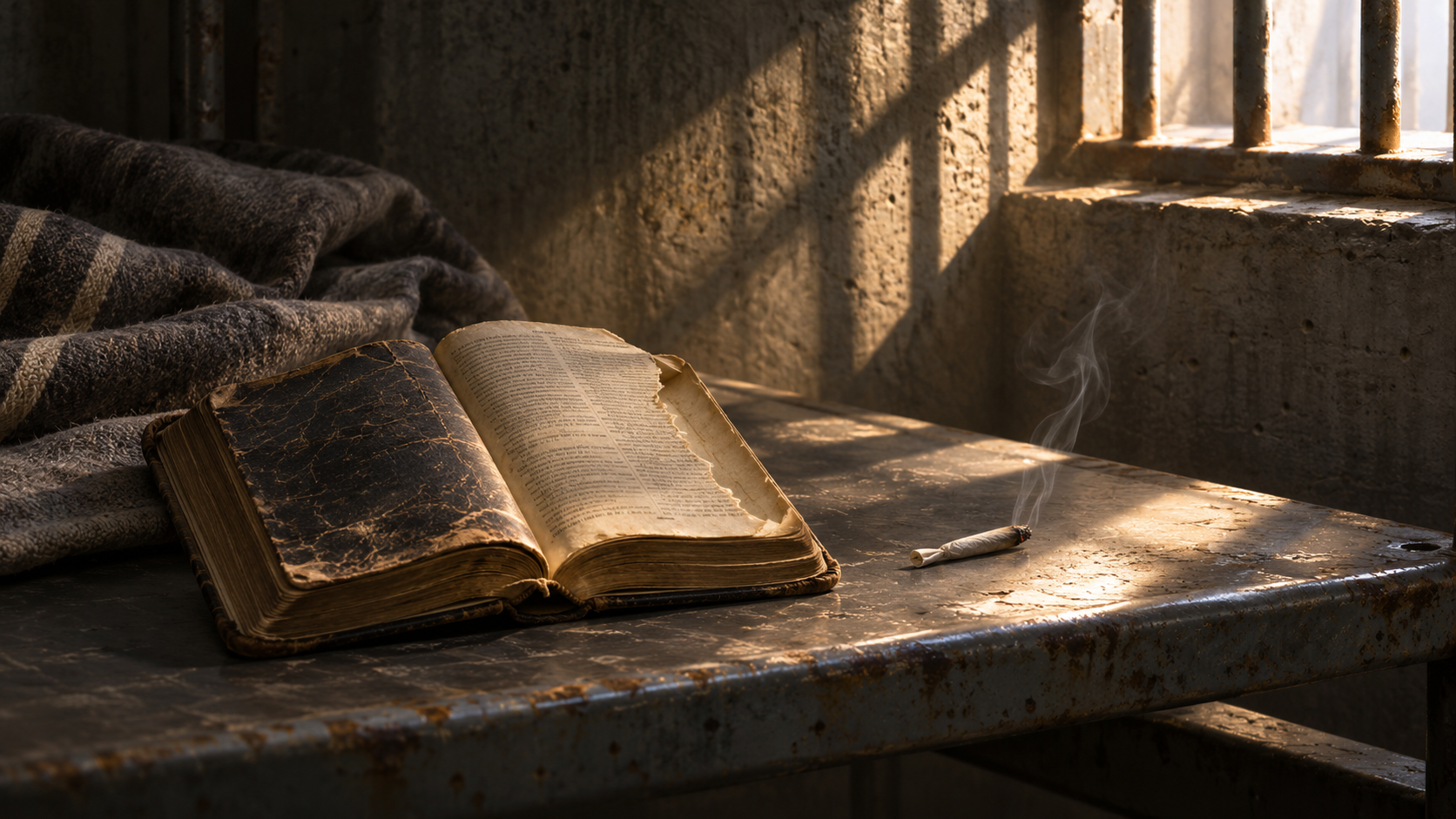
In jail, somebody told me paper Bibles were restricted because inmates had been smoking the pages. I had questions. How had the Word of God become a fire hazard? Apparently those thin pages served a purpose King James never contemplated: rolling papers. I have heard of people getting high on Jesus, but this was taking the idea literally.
Jefferson County’s solution was electronic tablets. No paper, no smoke. That brought me to another distinction: rights and privileges. Inside, the difference becomes clear quickly. We had a right to eat three times a day. We did not have a right to the television. Floor managers—men who had earned privileges from staff—controlled the remote and tablets. When somebody else holds the remote, whatever is on, is on.
Here was the joke God seemed to be telling at my expense. I had spent years building a network around choosing what you watch: Good News. Good Music. Good Works. Then I landed somewhere I had no say at all.
Some nights I had a thin plastic mat and blanket instead of a bunk. I was terrified. I prayed short prayers: Help me. Get me through tonight. Let me see morning. God heard every one.
I do not judge the men who smoked the pages too harshly. Jail strips away comfort, control, privacy, and dignity. People reach for whatever relief they can find. I understand the hunger better than I would like to admit. The irony is that the pages they were smoking held words about rest for the weary.
Every one of us has burned something precious trying to get warm. Grace is not a privilege. Floor managers do not hand it out, and nobody can take it away. You can confiscate paper and regulate the remote. You cannot regulate what happens inside a human heart.
Paper burns. The Word endures. And after living somewhere I could not choose what to watch, I have a renewed appreciation for the freedom to choose what fills my mind.
“The grass withereth, the flower fadeth: but the word of our God shall stand for ever.”
Isaiah 40:8 (KJV)
— JC