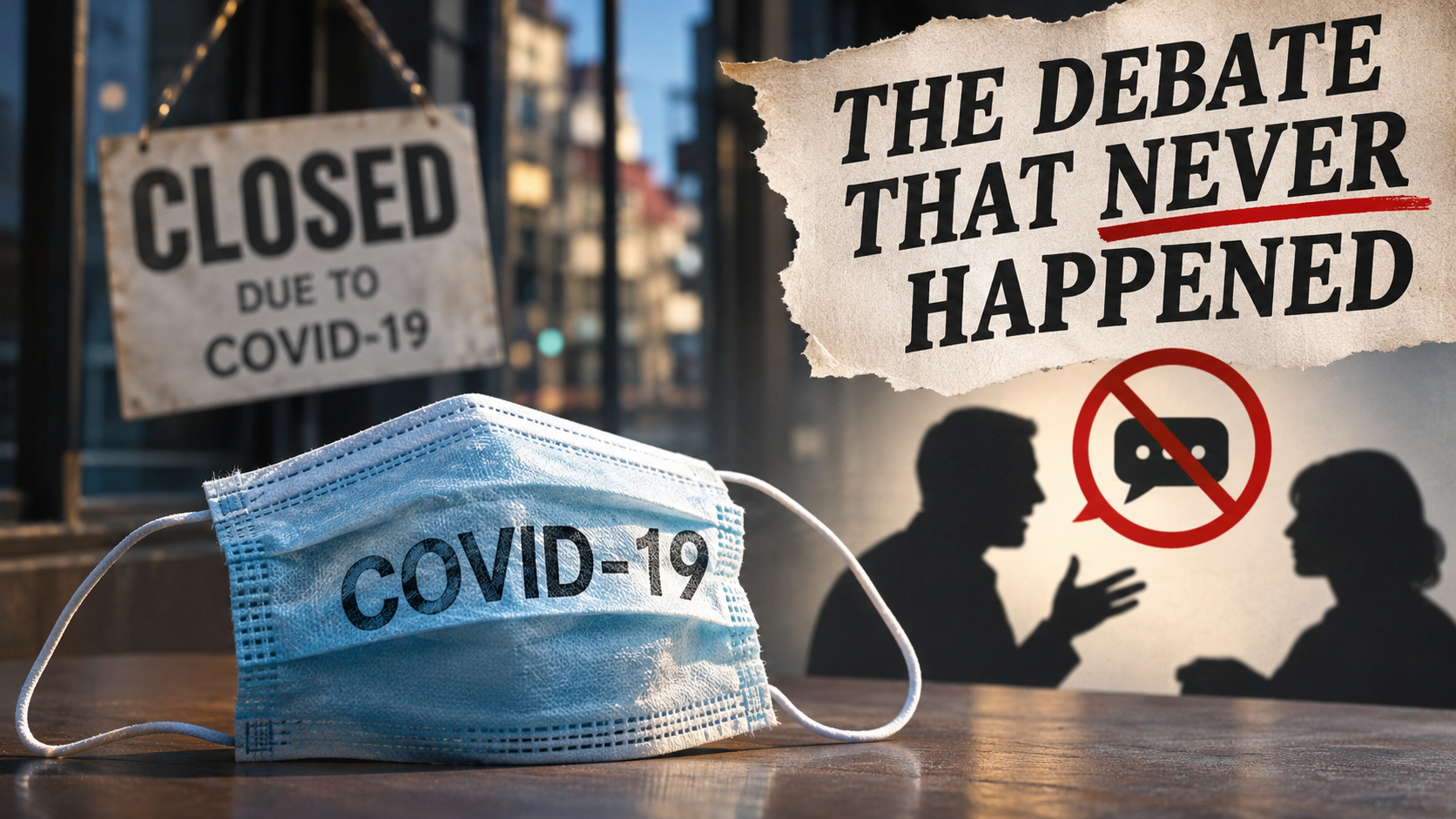
During COVID, one of the most consequential questions was not simply what policies governments should adopt. It was whether ordinary people, scientists, physicians, journalists, and neighbors could openly disagree about those policies without being dismissed.
There were debates, of course. But too often the public conversation felt less like a genuine exchange and more like a test of loyalty. Questions about school closures, mandates, lockdowns, risk, and competing harms deserved serious examination—not automatic suspicion.
Public health emergencies require decisions under uncertainty. They also require humility. Evidence changes, experts disagree, and policies can have unintended consequences. None of that means every claim deserves equal weight; it means strong arguments should be tested against evidence rather than protected from scrutiny.
Free speech is not the enemy of public health. Honest debate, transparent data, and the freedom to question authority help build the public trust that effective health policy needs.
We can recognize the suffering COVID caused, respect those who worked to protect others, and still ask whether our institutions made enough room for dissent. The lesson for the next crisis should be simple: make room for evidence, disagreement, and compassion at the same table.
Good News. Good Music. Good Works.