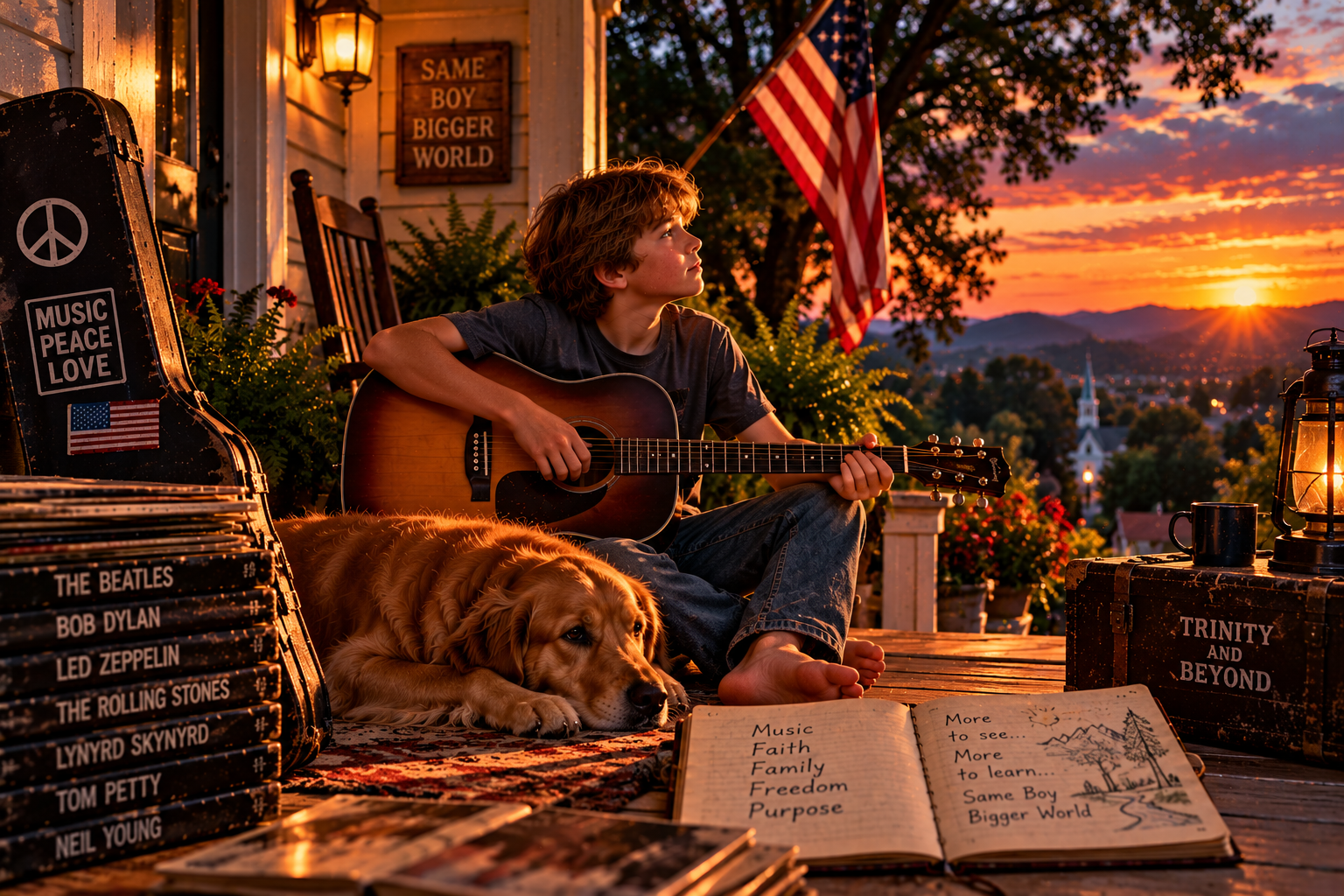
The Last Summer of Innocence
Nobody announces the last summer of childhood. There is no ceremony, no certificate, no kindly official standing beside the road to explain that the next turn will change everything. You simply wake one morning and discover that the familiar world has begun to feel smaller.
I remember summers in Alabama as a collection of sounds. Lawn mowers started before the heat became unreasonable. Cicadas argued from the trees. Screen doors slapped shut, and somewhere a radio played a song that seemed written specifically for the afternoon.
Time moved differently then. A day could last forever, particularly when there was nothing to do. We complained about boredom without realizing what a luxury it was to have hours nobody had claimed.
I had begun to measure my life against music. Songs lasted three or four minutes, but the best ones made those minutes feel larger than the clock allowed. I listened for the moment when the drums entered, for the breath before a singer began, for the space a guitarist left between two notes.
That space interested me most.
At home, the adults continued their work of being adults. Bills arrived. Meals were prepared. Decisions were made about things I barely understood. I mistook their routines for certainty, unaware that grown people often proceed with little more information than children, only with better shoes.
I was learning to disagree. Sometimes I had a reason. Sometimes disagreement simply made me feel older. I wanted to be trusted with choices, though I still hoped someone would rescue me from their consequences.
My mother could hear worry in my voice before I had admitted it to myself. My father seemed to believe that forward motion could solve nearly anything. Between them I saw two ways of meeting the world: listening to it and trying to change it.
I would spend decades confusing the two.
Church remained part of the landscape. I knew the hymns, the familiar passages, the cadence of a prayer nearing its conclusion. Yet belief had begun to feel less like an answer handed down and more like a question I would eventually have to answer for myself.
What did I believe when nobody was listening?
It was an uncomfortable question. I preferred questions about amplifiers.
One evening, I carried a guitar outside and sat where the porch light barely reached. I could not play everything I heard in my head. My fingers stumbled, the strings buzzed, and the song kept escaping just as I thought I had caught it.
I tried again.
Across the street, windows glowed in other houses. Families were eating dinner, watching television, disagreeing over ordinary matters. I imagined the private worlds behind those curtains and wondered whether everyone was as uncertain as I was.
A car passed. Its headlights swept across the yard, briefly illuminating the trees before disappearing around the bend. I listened until the engine faded.
Leaving still sounded romantic. I knew nothing about rent, exhaustion, or the loneliness of returning to a room where nobody expected you. The road in my imagination was always open, and every destination had a stage.
But the house behind me was real. So were the people inside it. Whatever happened next, I would carry their voices with me, sometimes as comfort, sometimes as an argument I could not stop rehearsing.
I put my hand against the guitar’s wooden body and felt the last note fade.
Years later, I would wish for another evening like that one: no emergency, no explanation demanded, no one waiting for me to choose sides. Just a boy on a porch, making an imperfect sound and discovering that imperfection did not mean the music had to stop.
The porch light came on behind me.
Someone called me to supper.
I went inside, leaving the guitar against the wall, certain there would be plenty of summers left. I did not know that growing up happens slowly. It happens quietly, while dishes are washed and the news plays. And then it is gone.