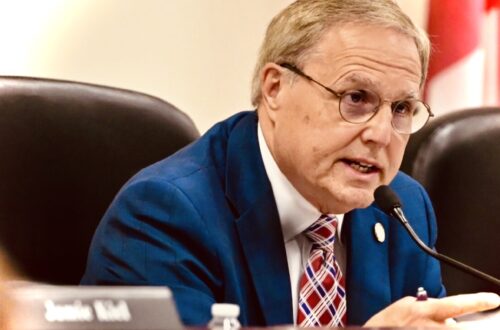
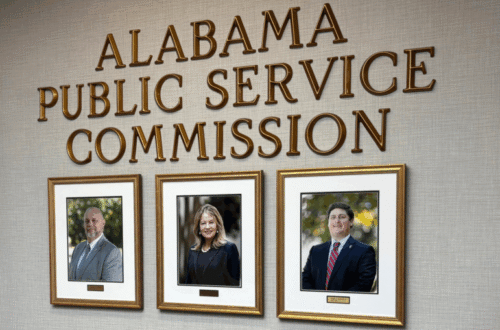
Efforts to restructure Alabama’s Public Service Commission (PSC) by shifting it from an elected body to one filled through appointments have stalled in the state legislature, exposing deeper divisions over how Alabama should oversee its energy system.
The bill lost steam in the Senate after lawmakers raised concerns about the speed of the process and the long-term effects of changing how PSC leaders are chosen. Right now, commissioners are elected statewide to regulate utilities, oversee energy infrastructure, and set electricity rates — a model that has long allowed voters to have a direct say in the oversight of the state’s largest power providers.
Supporters of the proposal argued that appointing commissioners could help limit outside political spending and “dark money” in PSC campaigns. Opponents countered that it would weaken voter oversight and hand too much control to the governor’s office.
U.S. Sen. Tommy Tuberville, now running for governor, was among the measure’s early supporters but later called for taking more time to craft a thoughtful solution. He’s floated an alternative idea — creating a statewide “Secretary of Energy” to coordinate with the PSC, Alabama Power, the TVA, natural gas providers, and rural co-ops to better manage long-term planning and energy costs.
The debate comes as Alabama faces rising energy demand from massive data centers and new industrial projects tied to artificial intelligence and manufacturing. But for some residents, the fear runs deeper — that structural changes to the PSC could open the door to greater centralization and less public accountability.
One resident following the issue voiced concern that the proposed changes would “add seats, stagger elections, and create an appointed executive who controls the schedule and agenda,” limiting the public’s ability to push back against policy shifts. The resident warned that this trend could mirror other agencies able to raise taxes or fees with little notice.
“Yes, the data centers, and more centralized control related to future implementation of a CCP-style social credit score system — cutting your power off for having the wrong opinions,” the resident said. “Control of real estate taxes, power bills, and water bills will allow the looter class to pry away real estate from American families.”
Such skepticism reflects a growing unease about consolidation — not just in energy, but across sectors where regulatory structures are increasingly insulated from voters. Supporters of reform insist Alabama’s energy system must modernize to meet demand and protect against outside influence, but critics say any shift that removes voter choice risks eroding transparency in the name of “efficiency.”
For now, lawmakers have pressed pause. The PSC remains an elected body, chosen directly by Alabamians — a system that, at least for the moment, keeps one of the state’s most powerful regulatory commissions in the hands of the public