The Chronicle of Fredegar preserves more than a legend—it preserves a pattern.
It tells how the wife of King Chlodio entered the sea, encountered a mysterious being called the Quinotaur—a five-horned, bull-like creature—and returned pregnant, giving rise to the line of Merovech, with the text openly admitting it was unclear whether the father was the king or the creature.
That detail is everything.
Because long before this, Book of Genesis describes a similar moment:
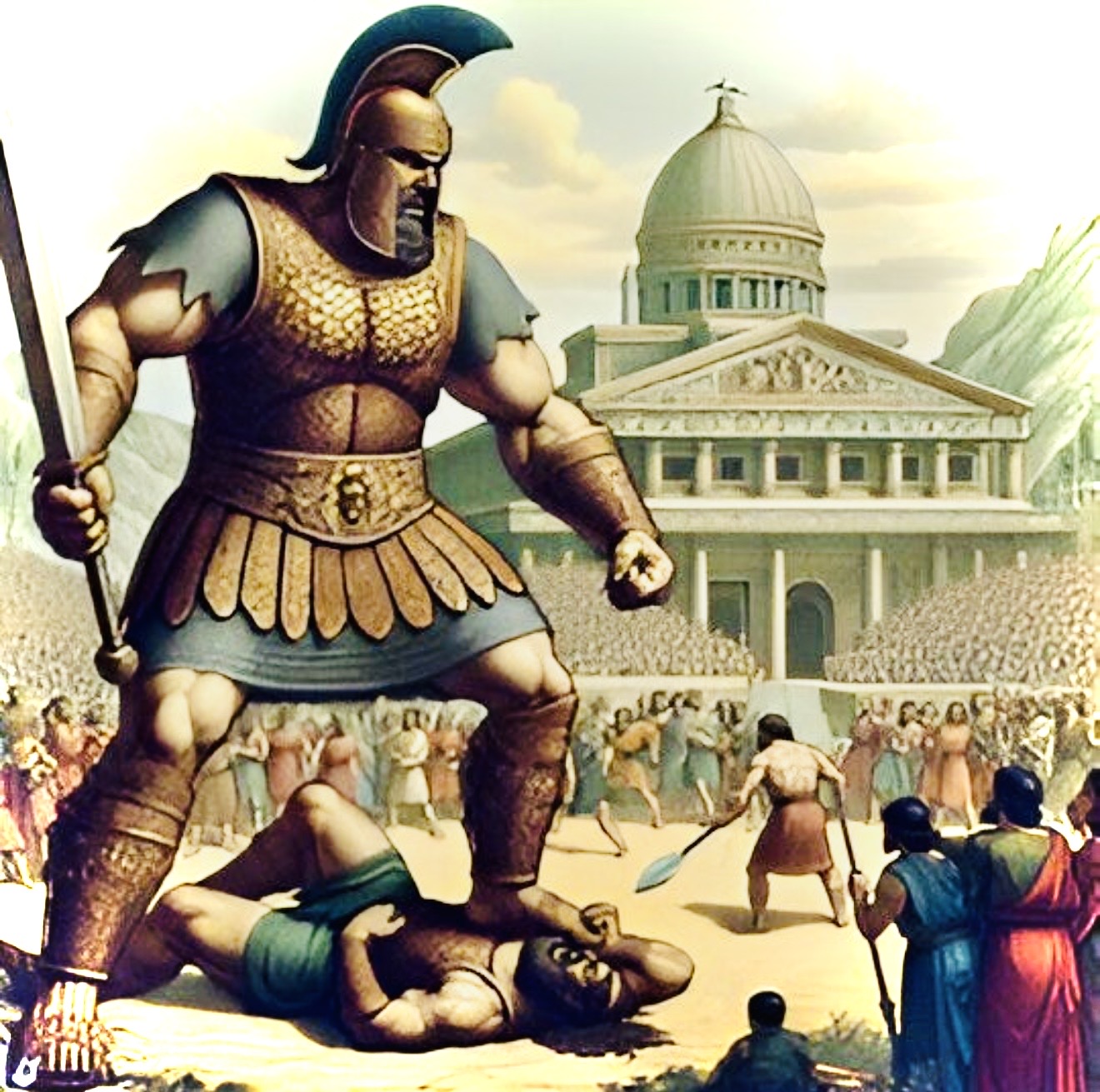
“The sons of God came unto the daughters of men… and they bore children to them… the same became mighty men… the Nephilim.”
Two accounts. Same structure.
A non-human father.
A human mother.
A child set apart—strong, dominant, destined to rule.
The Quinotaur is not just myth—it mirrors the Genesis pattern.
A being from beyond. A union. A new bloodline.
The symbolism reinforces it:
- The bull = power, kingship, fertility
- The sea = the abyss, the unseen realm, ancient forces
- The child = a bridge between worlds
This is how “divine right” gets encoded into blood.
Across civilizations, rulers claimed the same origin:
- Egypt → god-kings
- Greece → demigods
- Rome → divine lineage
- The Merovingians → born from the deep
Different cultures. Same message.
Kings are not just chosen—they are descended.
The Quinotaur story, alongside Genesis, points to a recurring idea: that certain ruling lines—what many later call “bluebloods”—trace back to a moment where humanity merged with something beyond it, producing leaders who carried both authority and mystery in their blood.
One line takeaway:
From Genesis to the Merovingians, the pattern is consistent—kings claim their authority through a bloodline born from the union of human and something beyond.